We’re introducing a new Hive Laboratory, which replaces the existing GraphQL Playground.
This update focuses primarily on the user experience. The new Laboratory is designed around interaction patterns developers already know from modern code editors, with the goal of making GraphQL exploration feel immediately familiar and predictable.
Rather than expanding scope, this release concentrates on improving how day-to-day work in the laboratory feels.
A Focused Laboratory Experience
Each section covers a core part of the workflow, from writing and organizing operations to managing execution context and debugging behavior.
A Familiar Way to Work with GraphQL
The new Laboratory is structured around common development workflows:
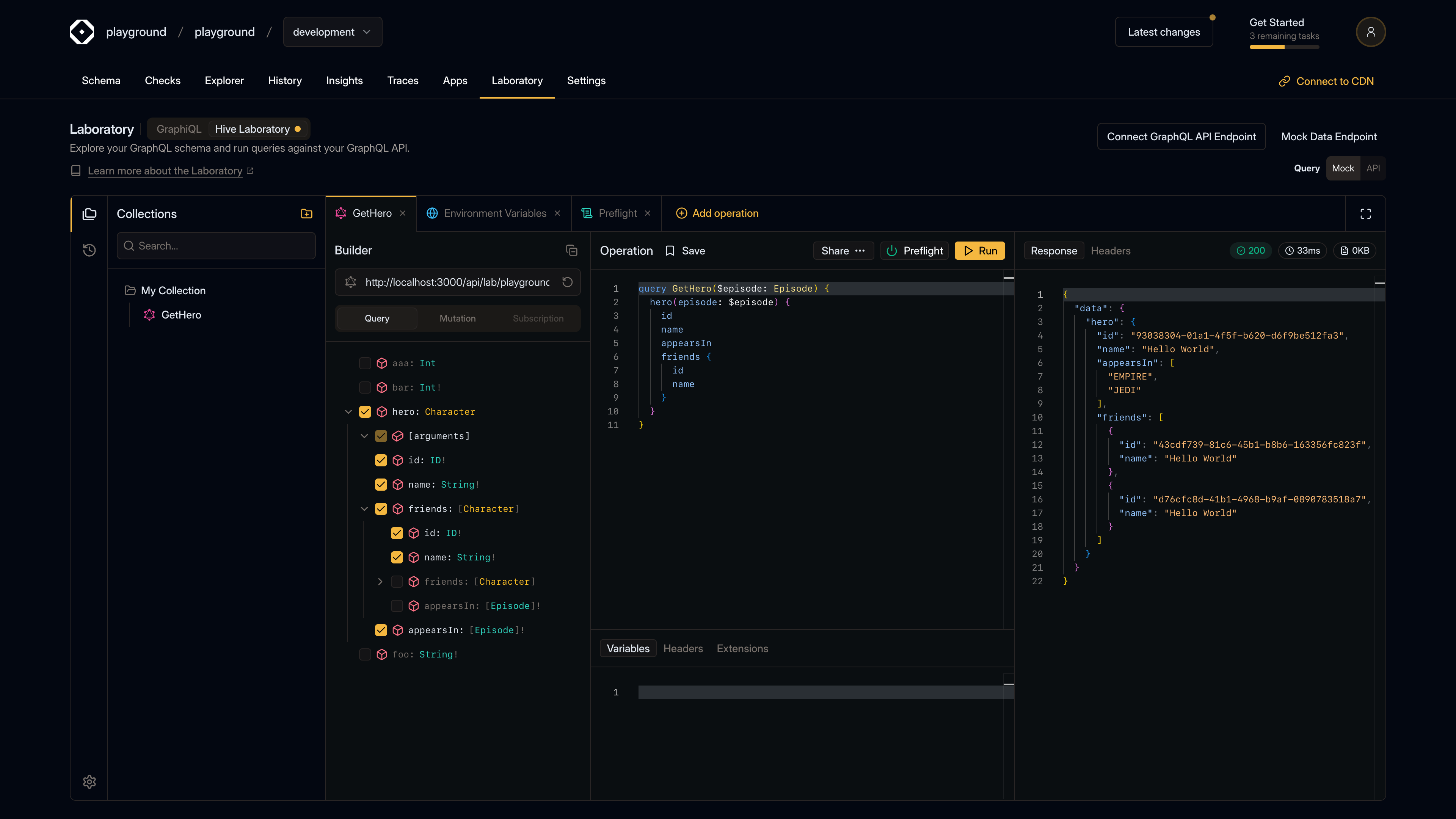
- Operations: Write and execute queries, mutations, and subscriptions in a schema-aware editor with validation and auto-completion.
- Collections: Group related operations together to keep shared workflows organized and easy to reuse.
- History: Review previous executions, including responses and timing, to better understand how an API behaves over time.
The interface borrows heavily from modern editors so that navigation, editing, and execution feel natural without additional learning.
Configuration That Matches Real Environments
The Laboratory includes tools to reflect real-world setups more accurately:
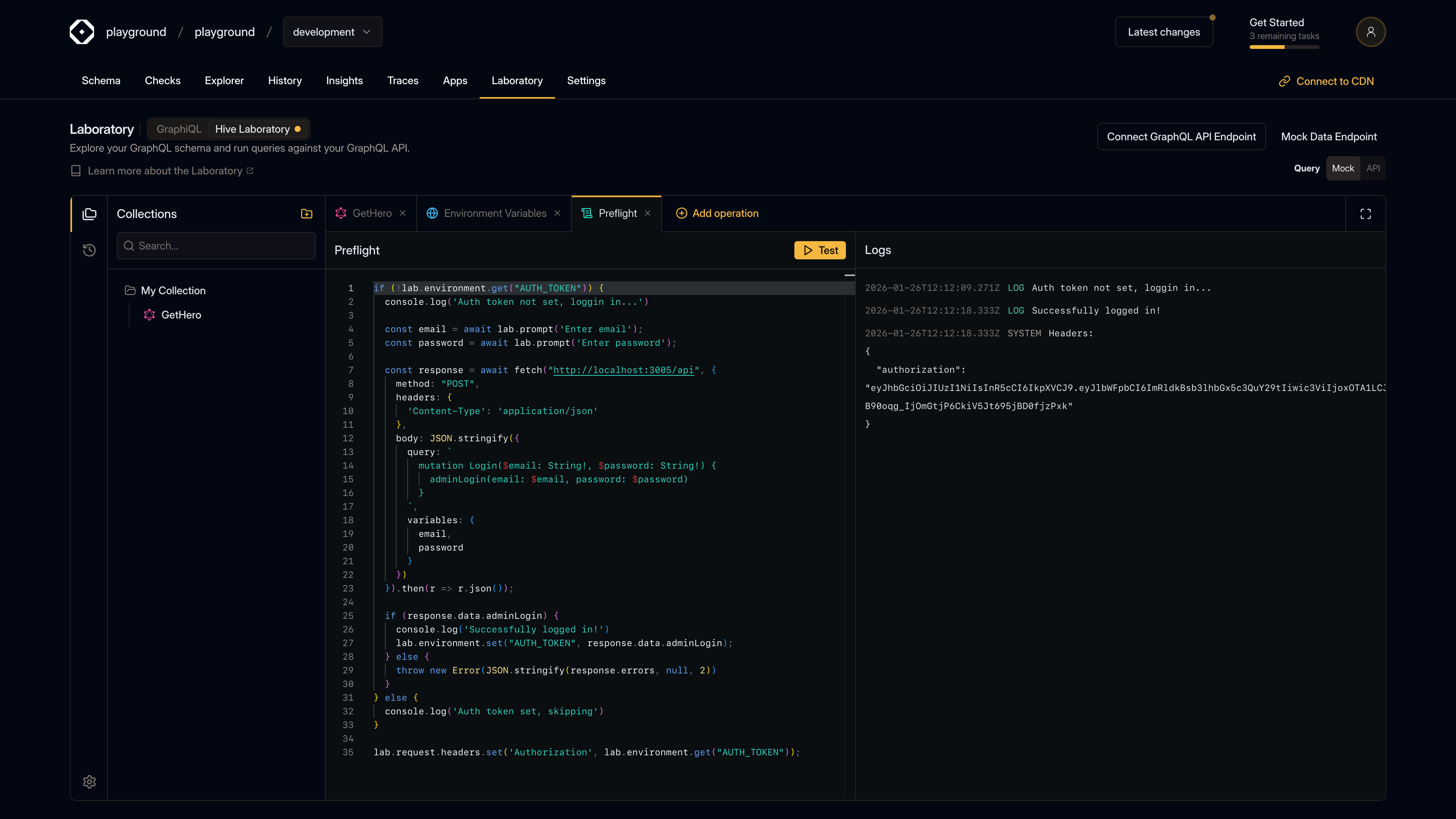
- Preflight Scripts allow running JavaScript before execution to prepare headers, handle authentication, or apply custom logic.
- Environment Variables make it easier to switch between environments without modifying operations.
This helps position the Laboratory as a practical workspace rather than a standalone testing surface.
The new Laboratory is available now in the Hive Console.
For details, see the Laboratory documentation.